
Start with the protected name
On an Emilia food shelf, “balsamic” is only the beginning of the name. The protected system covers Aceto Balsamico di Modena IGP, Aceto Balsamico Tradizionale di Modena DOP and Aceto Balsamico Tradizionale di Reggio Emilia DOP. EU rules tie a PDO’s raw materials and production steps to its origin, while a PGI requires at least one production, processing or preparation stage there. Those initials are not a simple quality ladder. Here they identify different specifications, ingredients and territories. Read the full protected name first; producer stories, decorative adjectives and bottle-age claims come after it.
- Emilia has one balsamic PGI and two separate traditional PDOs
- The full designation tells you which specification applies
Read the PGI as its own recipe
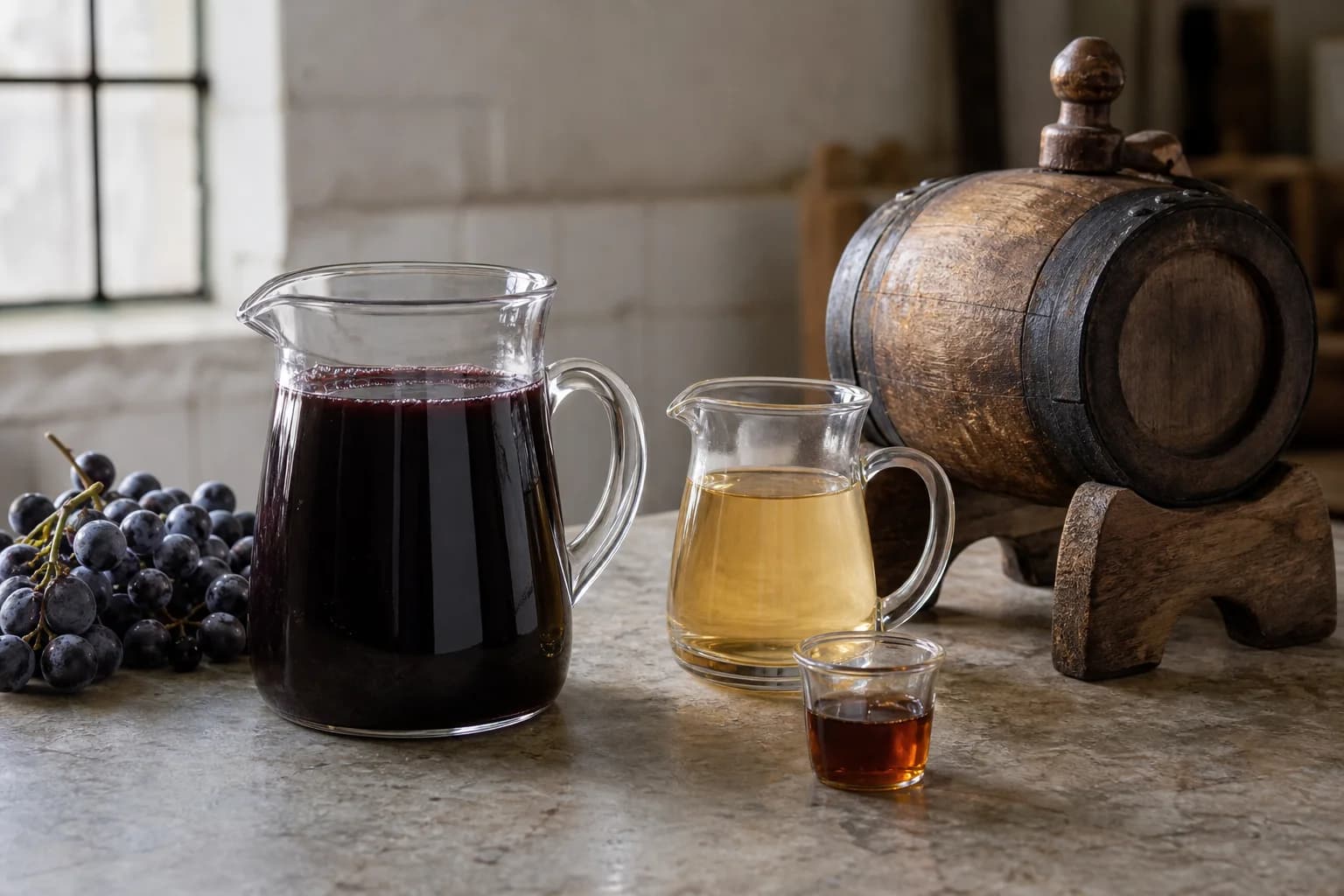
Aceto Balsamico di Modena IGP follows a defined blended recipe. Its current specification requires at least 20 percent cooked or concentrated grape must and at least 10 percent wine vinegar, plus a portion of vinegar aged for at least ten years. Caramel may be added up to two percent of the finished volume to stabilize colour; other additions are excluded. After the ingredients are assembled, acidification and refining take place in wooden vessels for at least 60 days. Production through refining or ageing belongs in the provinces of Modena and Reggio Emilia. These are not shortcuts around a traditional PDO recipe; they are the rules of a different protected product.
- The PGI combines grape must, wine vinegar and older vinegar
- Its minimum refining period in wood is 60 days
Notice what Tradizionale changes in Modena
Add the word Tradizionale and the method changes substantially. Aceto Balsamico Tradizionale di Modena DOP begins with grape must from the province of Modena, cooked in open vats. The specification allows no added wine vinegar or caramel; apart from an optional mother culture, no other substance is introduced. Fermentation, maturation and ageing happen in ventilated acetaie exposed to natural temperature changes, over no less than 12 years. The cooked must is transferred successively among numbered casks of different sizes and locally traditional woods. A battery of small barrels is therefore production equipment, not rustic decoration, and it explains why this condiment cannot be read from colour alone.
- The Modena PDO starts with local cooked grape must
- Successive transfers through small casks continue for at least 12 years
Give Reggio Emilia its own PDO
Reggio Emilia is not a secondary label for the Modena product. Its traditional balsamic vinegar has a separate PDO tied to grapes, processing, ageing and bottling in the province of Reggio Emilia. Cooked must undergoes alcoholic fermentation and acetic oxidation in an acetaia, then matures for at least 12 years through successive transfers in a numbered battery of different casks. Before sale, a tasting panel evaluates eligible batches. The prescribed inverted-tulip glass bottle carries a numbered orange, silver or gold mark reflecting that classification. Do not interpret the colours as age bands alone: the system also considers sensory score and density, with an age condition for the highest category.
- Reggio Emilia’s traditional balsamic vinegar is a distinct PDO
- Its coloured marks follow a sensory classification system
Treat age words narrowly
Protected age language is more precise than the romance around an old acetaia. The Modena PGI may use invecchiato after at least three years in wooden vessels. Traditional Modena DOP is Affinato from at least 12 years and may be called Extravecchio from at least 25; its specification forbids a vintage year. Reggio Emilia DOP likewise forbids vintage references and reserves extra vecchio for vinegar aged at least 25 years that also meets its chemical and sensory requirements. A barrel may be a century or two old without making the liquid inside 100 or 200 years old. Read the permitted term and protected seal, not an implied family chronology.
- Old casks do not prove an equally old vinegar
- Extravecchio means at least 25 years for both traditional PDOs
Match the bottle to the job
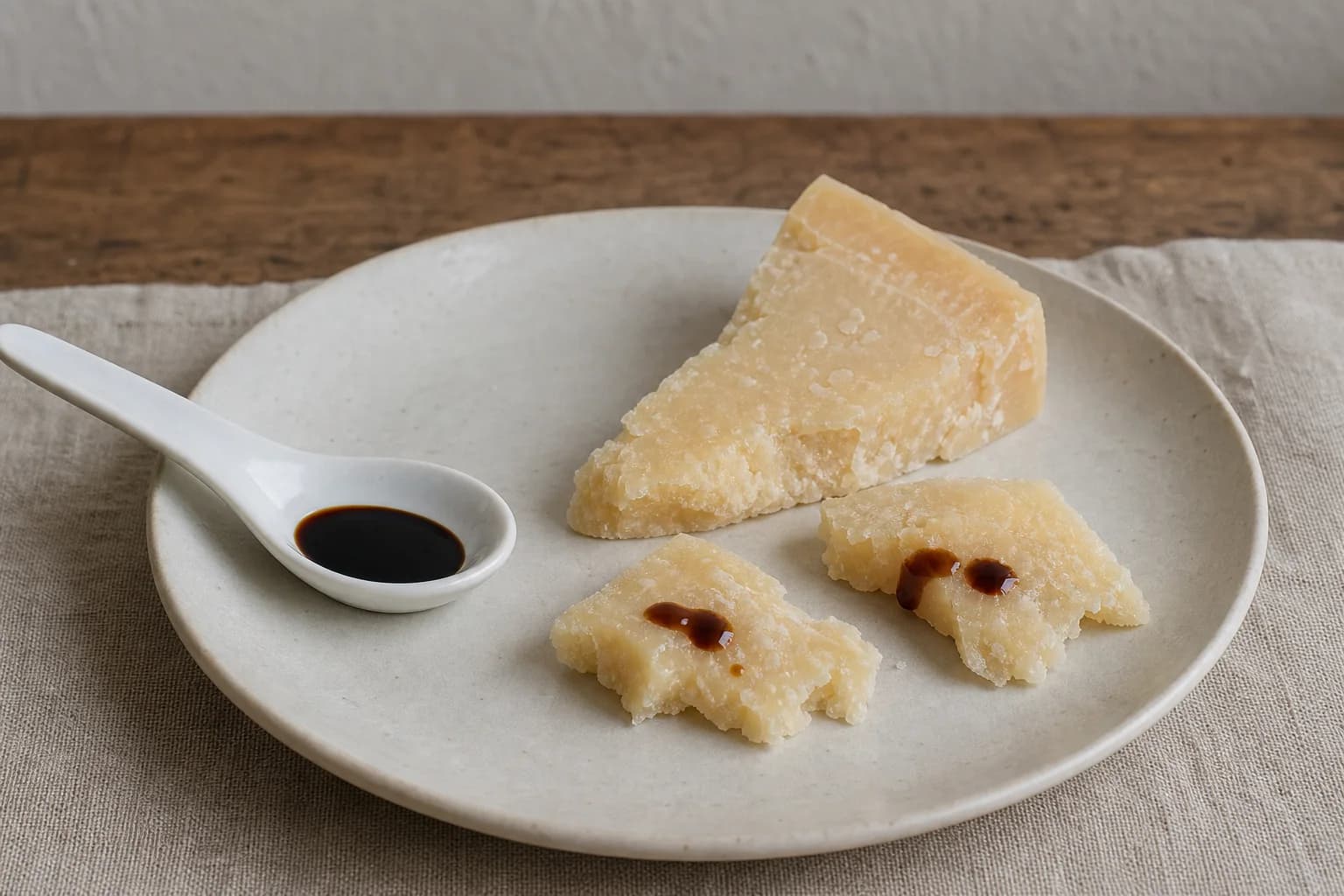
Use follows from understanding the bottle, not from declaring one designation universally superior. The Modena traditional consortium recommends tasting its PDO in small quantities and using a few drops as a finishing touch on mature cheese, meat, fish, fresh fruit or dessert. Emilia-Romagna’s agriculture authority also lists Reggio Emilia DOP with salads, risotto, tortelloni and meat, or tasted by itself from a small spoon. Those examples suggest attention to dose and placement, not a rule that every PDO must be saved for ceremony. Before buying, decide whether you need an ingredient throughout a recipe or a final accent, then compare the exact name, ingredients and permitted age term.
- Traditional PDOs are commonly used in small, deliberate quantities
- Choose by recipe role after checking the exact protected name
Sources and further reading
- Geographical indications for food and drink — European Commission
- Aceto Balsamico di Modena PGI Production Specifications — Protection Consortium
- Traditional Balsamic Vinegar of Modena PDO Product Specifications — Protection Consortium
- Traditional Balsamic Vinegar of Modena PDO FAQ — Protection Consortium
- Traditional Balsamic Vinegar of Reggio Emilia PDO — Emilia-Romagna Region
- Traditional Balsamic Vinegar of Reggio Emilia PDO Production Specification — Emilia-Romagna Official Bulletin