
Start with seventeen living territories
On a map, Siena’s contrade look like seventeen districts inside the city walls. They are more than lines between streets. The Comune describes territory as a fundamental element of each Contrada, while the 1729 Bando dei confini fixed the boundaries still used for the present seventeen. Their history also resists a neat founding date: municipal material finds evidence by the mid-fifteenth century and traces a long shift from military and civic duties toward social and recreational purposes. For a future resident, the useful starting point is that the old center contains living institutions whose geography still organizes memory and belonging.
- The present seventeen territories follow boundaries fixed in 1729
- A Contrada is an institution as well as a part of the city
Separate residence from belonging
A home address and Contrada membership are related, but they are not interchangeable. The city’s Palio portal describes belonging through birth in the territory, descent from contradaioli, or, more recently, sympathy. People considered native members remain attached after moving away. The sympathy route is not presented as a decorative preference: it involves choosing by affinity, paying the protettorato, frequenting the headquarters and contributing actively. A newcomer can therefore learn where a street sits without announcing an inherited identity. Membership is a relationship sustained through people and participation, not a neighborhood label acquired with a lease.
- Birthplace, descent and sustained affinity are distinct routes to belonging
- Living at an address does not by itself describe Contrada membership
Read it as an institution
The language of a sports team is too small for what happens behind a Contrada door. Each Contrada has its own statute and a governing Seggio, generally led by the Priore. Other roles cover administration, correspondence, finances, property and archives, while the Capitano is responsible for Palio affairs. Municipal guidance says elections follow each Contrada’s statute, commonly every two or three years, and voting is secret. These details matter because they separate the year-round institution from its most visible race. When residents speak about their Contrada, they may be referring to governance, service and collective decisions as much as horses, flags or rivalry.
- Each Contrada follows its own statute and elected structure
- The Capitano’s Palio role sits within a larger year-round institution
Look for three rooms behind the name
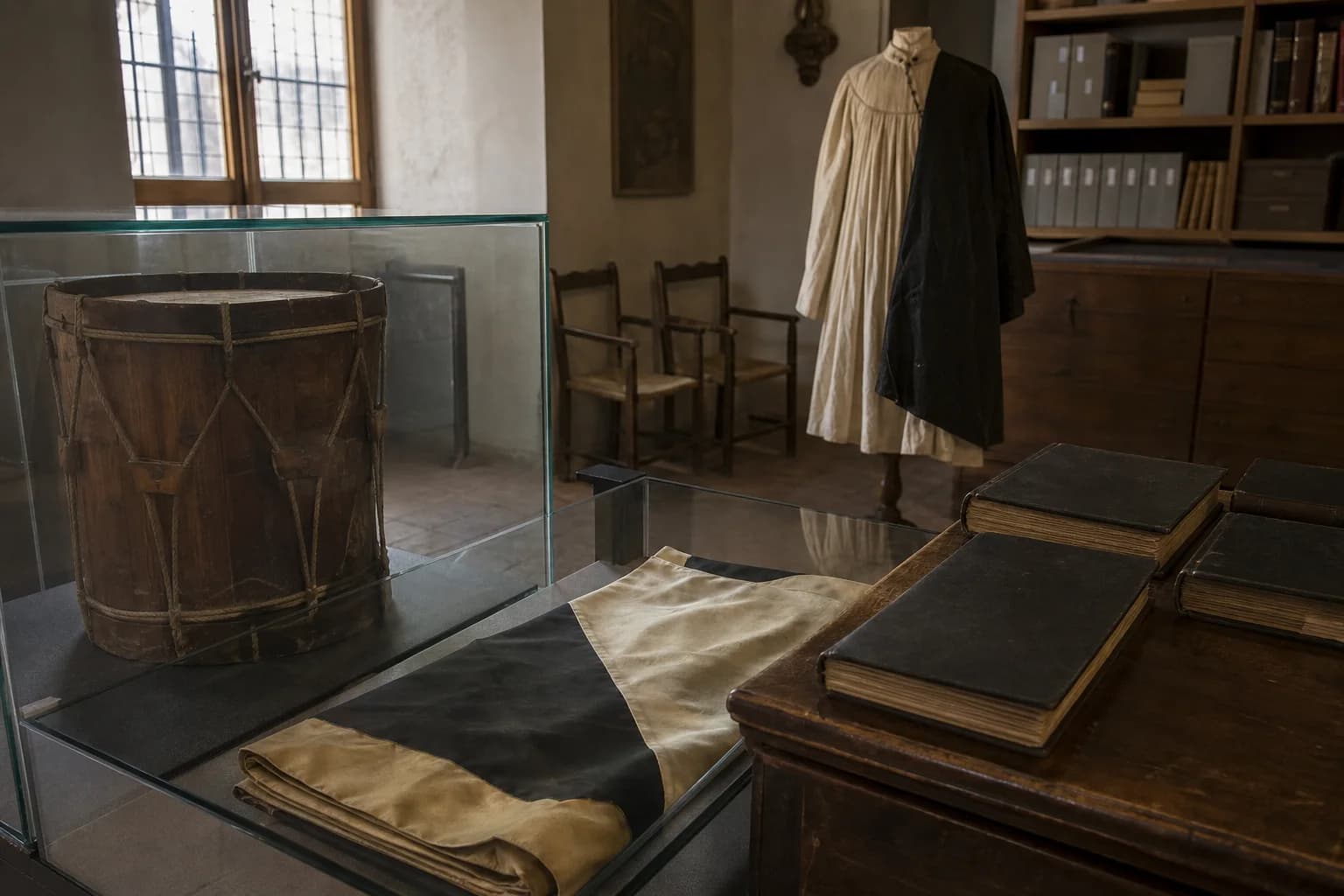
Each Contrada’s headquarters brings together three different kinds of space: a museum, an oratory and a society. The museum safeguards Palio trophies alongside flags, costumes, drums, artworks and administrative archives; the oratory is the Contrada church. The society is the everyday meeting place, supporting recreational, cultural and sporting activities even when the Palio is distant. Comune material notes that these societies are especially important because many contradaioli no longer live inside their rione. For a prospective resident, this explains why the life of a Contrada cannot be measured simply by how many decorated doorways appear on one street.
- Museum, oratory and society serve different institutional roles
- The society sustains contact beyond the physical rione
Notice the work that continues after the race
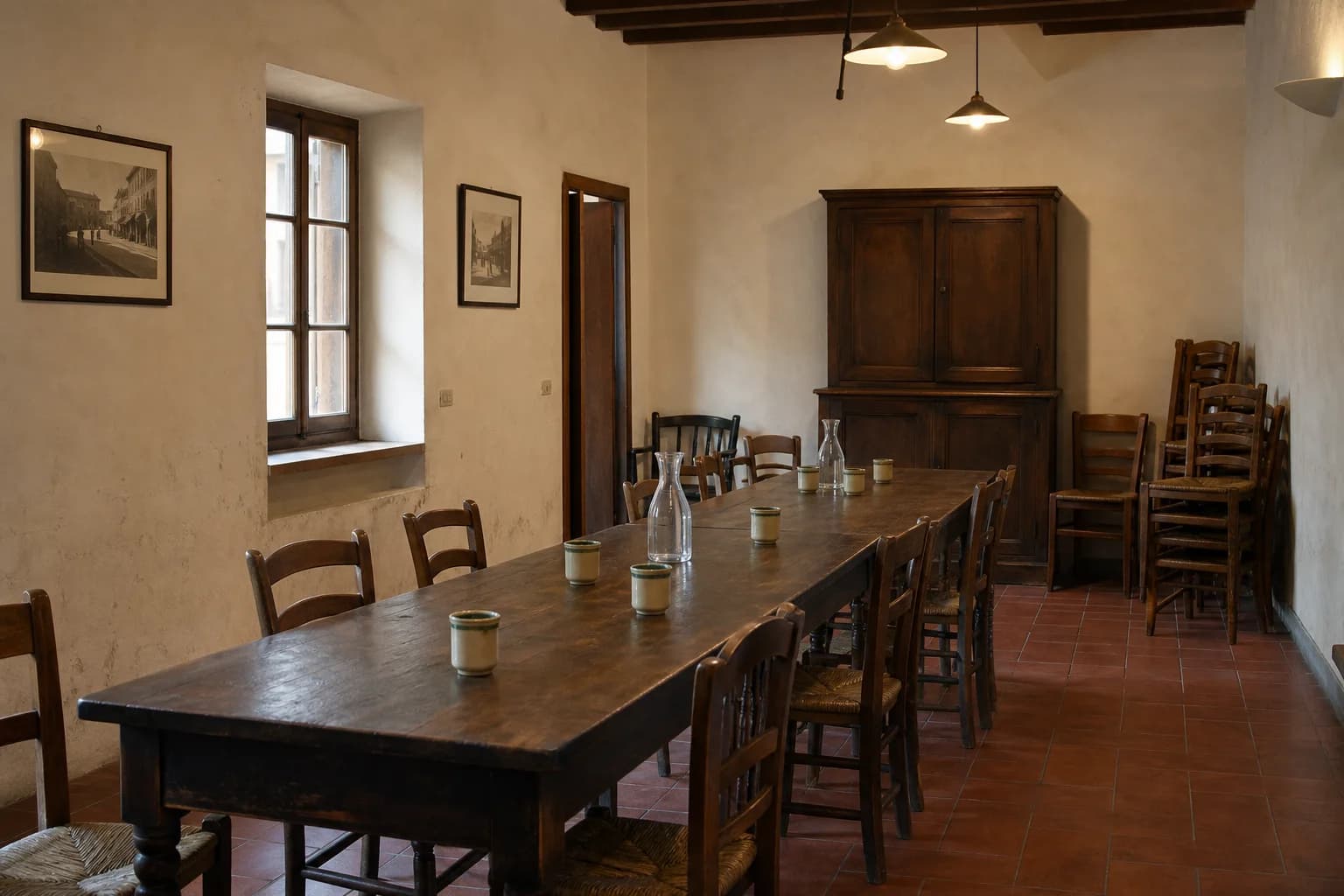
The social work extends beyond preserving objects or preparing for a race. Visit Siena, the city’s official visitor site, describes Contrade maintaining areas and green spaces, organizing activities for children, young people and older residents, supporting solidarity and promoting culture. Coordination does not erase their autonomy: the Magistrato delle Contrade is a permanent gathering of the seventeen Priori that represents shared interests and works with city authorities. The pattern is therefore both intensely local and city-wide. A Contrada tends its own relationships and territory while also operating inside a framework that helps the seventeen institutions act together.
- Contrade support social, cultural and neighborhood activities
- The Magistrato coordinates shared interests without erasing autonomy
Enter by participation, not performance
Public tradition offers a better introduction than imitation. Each Contrada holds an annual festa titolare for its patron, with religious observance, neighborhood celebration, visiting representatives from allied Contrade and a ceremonial giro; the municipal account says its rooms open to visitors during the feast. For a newcomer, the respectful sequence is simple: learn the name and boundary of the place where you live, use official Contrada channels, attend occasions explicitly open to the public and listen before claiming familiarity. The official sympathy route shows that new attachment is possible, but it is built through regular presence and useful participation rather than instant self-assignment.
- The annual patronal feast joins religious and neighborhood traditions
- New attachment depends on regular participation, not instant self-identification
Sources and further reading
- Historic Centre of Siena — UNESCO World Heritage Centre
- La Contrada — Comune di Siena Palio Portal
- Il popolo — Comune di Siena Palio Portal
- Struttura — Comune di Siena Palio Portal
- Sedi e musei — Comune di Siena Palio Portal
- Festa titolare — Comune di Siena Palio Portal
- Le Contrade di Siena — Visit Siena Official
- Magistrato delle Contrade — Il Palio Siena